Double Programming in R: Validate a Derived Dataset with diffdf
A complete, runnable tutorial on double programming — the industry-standard quality-control method for validating a derived clinical dataset. Learn what double programming…
How a derived clinical dataset earns a regulator’s trust. This series teaches the validation and quality-control discipline that sits between “the code ran” and “the dataset is submittable”: independent double programming with diffdf, defensive assertions, reproducibility, and R package qualification — each worked on public pharmaverse data, so every check runs.
Learn › Pharma & Clinical › Validation, QC & Defensive Programming
A derived clinical dataset is not trusted because the code ran without error. It is trusted because a second, independent programmer reproduced it and the two outputs matched exactly, because it checks its own assumptions while it runs, and because the environment that produced it is qualified and reproducible. That discipline — validation and quality control (QC) — is what turns a working script into a submittable deliverable. This series teaches it in R, the practical way, on public pharmaverse data so every check runs. The runtime is the judge.
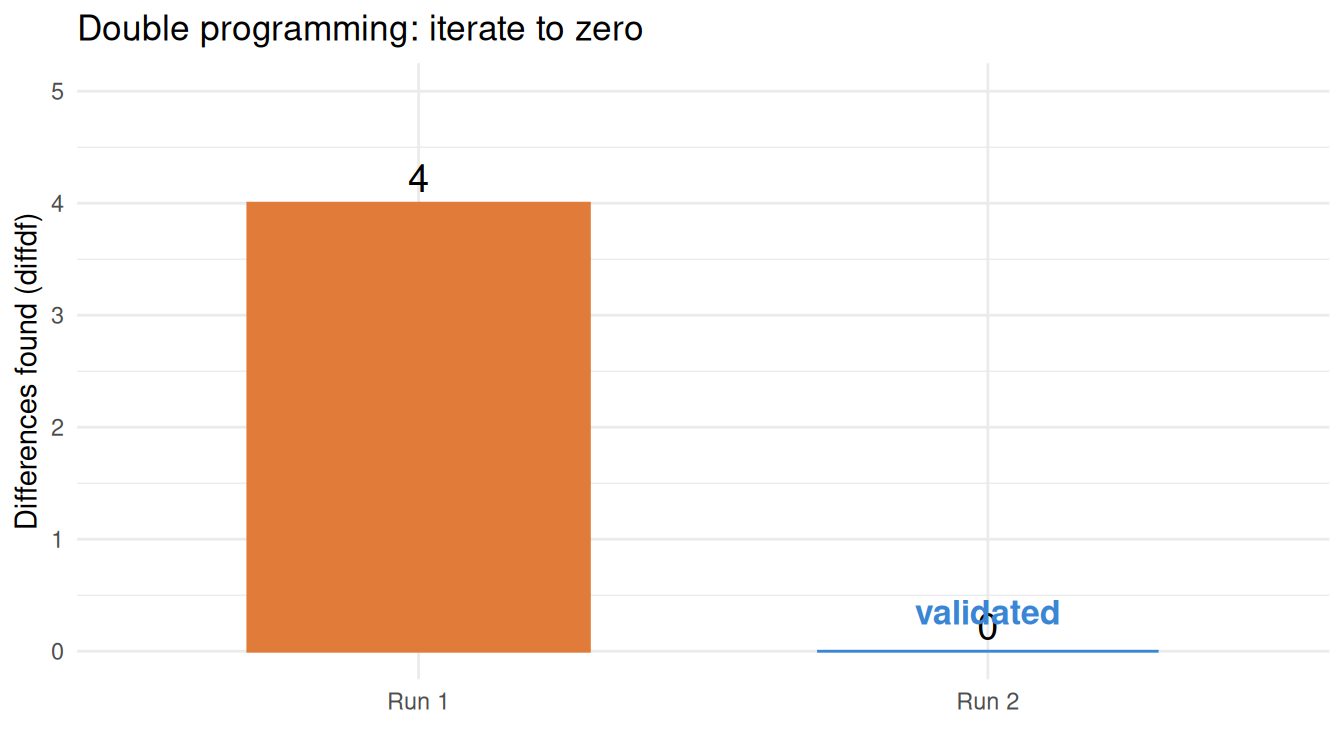
The core idea is independent verification: the production programmer and the QC programmer work from the same specification but write separate code, and the two datasets must agree to the value. Zero differences means validated. The arc:
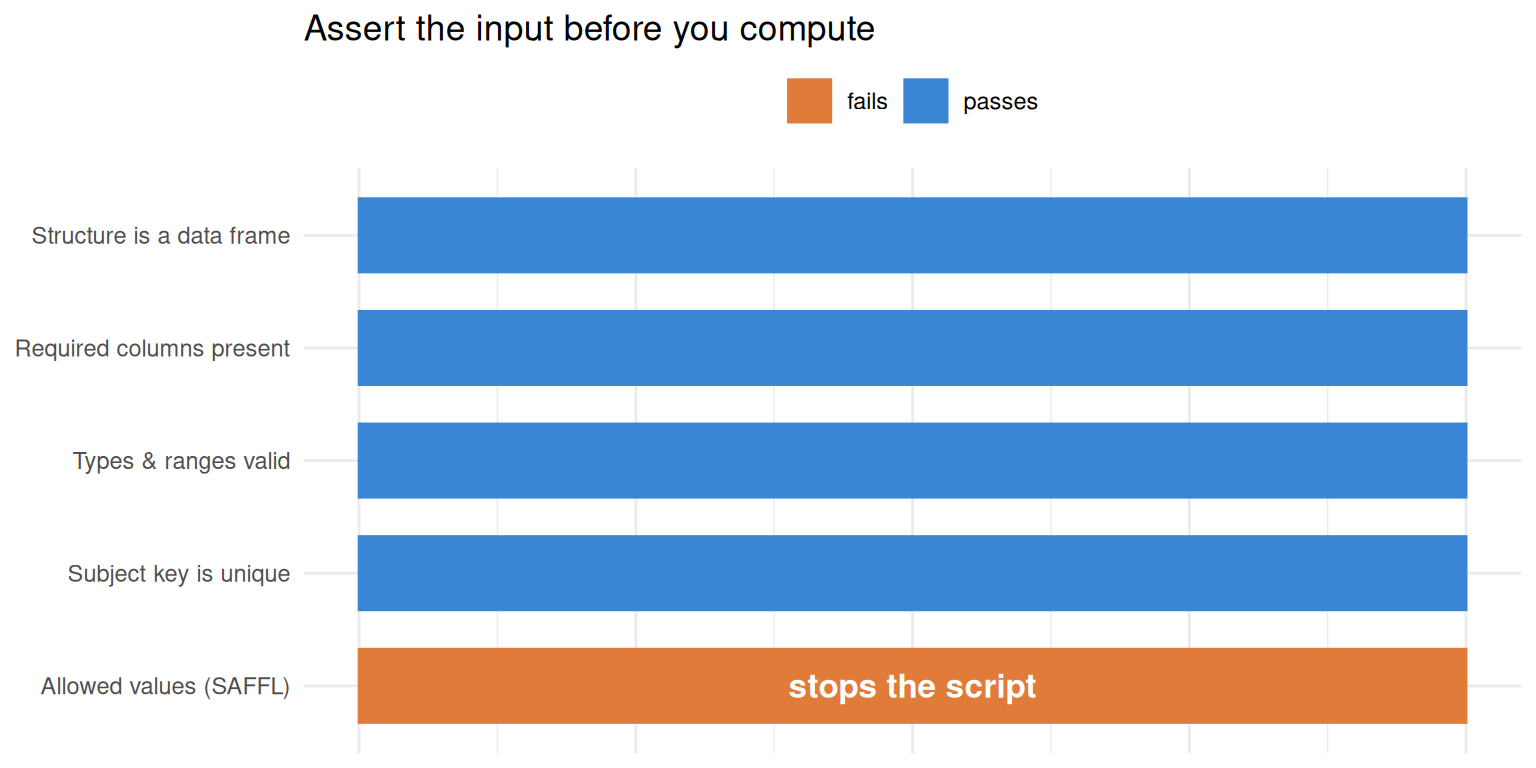
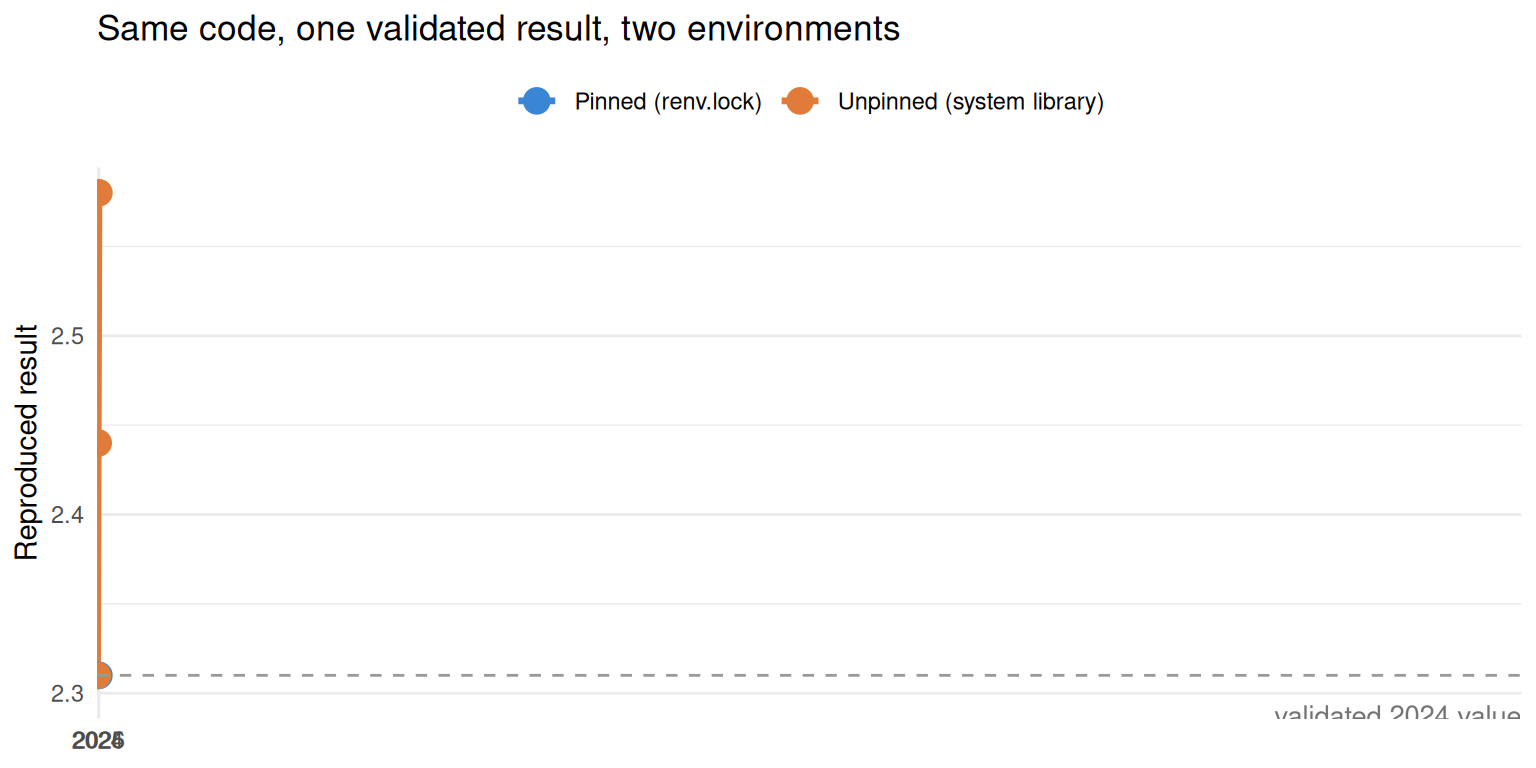
diffdf(), read the difference report, catch a seeded discrepancy, fix it, and iterate to zero.stopifnot() plus the checkmate and assertthat packages.renv.lock, and understand why a reproducible, qualified environment is part of a submission’s audit trail.riskmetric — answer the regulator’s question “how do you know the R packages you depend on are fit for use?” Score an installed package’s risk with the R Validation Hub’s riskmetric — maintenance, documentation, testing, and activity metrics — read the results honestly (including which metrics need network and return NA in a sealed validated environment), and fit it into a package-qualification SOP.Ask Prova “how do I QC a derived ADaM variable in R with double programming and diffdf?” — it answers grounded in runnable R and the CDISC validation workflow, so the check fits your study, not a generic example. The runtime is the judge. Ask Prova →
Prove you can do it. Master the whole Clinical Programming in R (pharmaverse) series — track your path, build projects, and earn a certificate.
Go Pro — unlimited Prova on your own data and a verifiable certificate that proves the skill.
from $15/mo billed yearly
✓ You're Pro — keep going. The runtime is the judge.
@online{untitled,
  author = {},
  title = {Validation, {QC} \& {Defensive} {Programming}},
  url = {https://www.datanovia.com/learn/pharma-clinical/05-validation-qc/},
  langid = {en}
}